Lochs and Glens Books

Wednesday, 28 February 2007

Tour Glencoe


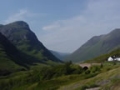
Glencoe, Scotland, ranks among the most famous historic sites in Scotland, notable because of the infamous massacre, in 1692, of the MacDonalds of Glencoe, the smallest of the Clan Donald sects. Although worse atrocities involving greater slaughter have occurred during Scotland's turbulent past, the Massacre of Glencoe has earned a unique place in the lore of the Highlands because of its treacherous and brutal manner of execution. Tour Glencoe. Tour Scotland.

Glencoe and Beyond


Glencoe and Beyond. This perceptive and informative study examines all these aspects and shows ultimately that chiefs, tacksmen, clansmen, and even southern sheep-farmers were all individuals reacting to the circumstances in which they found themselves, and that these circumstances themselves were characterised by a great deal of economic turbulence. It has been widely accepted in the past that sheep-farming in the Highlands was developed and undertaken by southern incomers; some modern historians have even dismissed the possibility that Highlanders could have become sheep-farmers because they lacked the necessary skill and capital. Ian S. MacDonald's meticulous research disproves this and illustrates that in the late eighteenth and early nineteenth centuries that while some southern sheep-farmers did indeed move into the Highlands, they were in fact greatly outnumbered by native Highlanders, who saw a future in sheep-farming, initiated it themselves, and pursued it vigorously, as is shown when the Minister of the Parish of Kilmanivaig wrote about sheep-farming in 1842: It is supposed that there are upwards of 100,000 sheep reared in this parish every year, Mr Cameron, Carychvilly [Corriechoille], the most extensive grazier in the north, stated a few years ago, that in the preceding year he had clipped upwards of 37,000 sheep, Mr Greig of Tullach [Tolloch], and the Messrs M'Donnell of Kappoch, are supposed to have each near 100 square miles under sheep: the one on the north and the other on the south banks of the Spean. Glencoe and Beyond: The Sheep-farming Years, 1780-1830.

Glens of Silence


Glens of Silence. During the last years of the eighteenth century and the first half of the nineteenth, tens of thousands of Highlanders were forcibly removed from land on which their families had lived for generations. Often evicted in the most autocratic and brutal manner, they were moved to marginal and unworkable areas, often on the coast, while the land from which they were wrenched was given over to large-scale sheep farming. Many were subsequently forced to make new lives for themselves in the Lowlands or colonies after their failure to make any kind of living on such unproductive soil, a dismal situation which was compounded by the potato famine of 1846. Stunning colour photographs depict the actual townships as they are today and the landscapes from which so many were banished, each conveying not only the natural beauty and colour of some of Scotland's most spectacular scenery, but also capturing the spirit of these places that witnessed such traumatic and shattering events. The Glens of Silence: The Landscapes of the Scottish Clearances.

The Story of Loch Ness


The Story of Loch Ness. Known throughout the world for its legendary inhabitant, Loch Ness has inspired folklore and fascination in the hearts of those who visit it for centuries. But what of the characters, the history and the myths which enchanted inhabitants and travellers alike long before the first sightings of the so-called Loch Ness Monster? Katharine Stewart takes us on a journey through the past and the politics, the heroes and villains, and the natural beauties that are the true source of the magic of Loch Ness. Where did the name Loch Ness come from, and how did Cherry Island come to be? What can be said of the wildlife that makes its home around the loch? Who determined the fate of the Loch Ness valley as we know it today?
While the depths and secrets of Loch Ness may never be revealed entirely, Stewart provides the answers to these and so many other questions in this compelling guide to one of Scotland's most famous places. The Story of Loch Ness.

Fishing Scottish Lochs


Fishing for Wild Trout in Scottish Lochs. A detailed study of the natural history of Scotland's trout. The ecological and social development of loch fishing is examined and the diversity of lochs and key factors affecting successful fishing. A section describing the legal implications of where one can fish is included. Fishing for Wild Trout in Scottish Lochs.

Folklore of Scottish Lochs

This book explains and interprets the origin of superstitions connected with Scottish lochs and springs. It sheds light on how these misinterpretations have come about and how the imagination can distort reality. Partial Contents: Worship of Water, How Water became Holy, Saints and Springs, Stone Blocks, Healing and Holy Wells, Water-Cures, Water-Spirits, Charm-Stones, Sun-Worship and Well-Worship, Wishing-Wells. Folklore of Scottish Lochs and Springs (1893).

Glens of Argyll


Glens of Argyll. The Glens of Argyll includes: Oban, Lorn to Inverary, East of Loch Awe, and Cowal Knapdale, and Kintyre. The Glens of Argyll (Scottish Glens).

Trossach Glens


Trossach Glens. The Glens of Trossach includes: Queen Elizabeth Forest Park, South Tayside and Lochearnhead, Callendar to Comrie and Crieff and the Ochil Hills. Trossach Glens: A Personal Survey for Mountainbikers and Walkers (Scottish Glens).

Lochs and Glens


Lochs and Glens of Scotland. The part played by the last ice age in moulding and sculpting the landscape, and directing and redirecting the flow of rivers and lochs has given us much of our scenery, but the underlying structure was determined by earlier geological history. To this we owe the slabby magnificence of the Torridonian sandstones found in the North-west Highlands, the rugged grandeur of Glencoe, the granite plateau of the Cairngorms. The distinctive appearance of each stretch of country is due to the character of the underlying rocks. At Elphin in Sutherland, after travelling through wastes of peat and ancient rock and seeing those extraordinary sandstone structures Stac Pollaidh and Suilven, we come into a green haven, a patch of the limestone that outcrops from Durness on the north coast down to Skye. Further south, in Wester Ross, one can drive over the rugged desolation of the Bealach nam Bo, look across the Applecross peninsula, and come down to the jewel-like green of that ancient holy place, the sanctuary of Saint Maol Rubha, endowed with a more generous geology. Lochs and Glens of Scotland.

Atholl Glens


Atholl Glens. The Atholl Glens includes: The Glens East of Drumochter, Glen Tilt to Cairnwell, and Aberfeldy to Dunkeld. Atholl Glens: A Personal Survey of the Atholl Glens for Mountainbikers and Walkers (Scottish Glens).

Glens of Ross-shire


Glens of Ross-shire. The Glens of Ross-shire includes: Inverness to Shiel Bridge, Easter Ross, Wester Ross. The Glens of Ross-shire: A Guide for Walkers and Mountainbikers (Scottish Glens).

Power from the Glens


The Dambuilders: Power from the Glens. In the 30 years between the end of World War II and 1975, the construction schemes of the North of Scotland Hydro-Electric Board changed the face of the Highlands and brought electricity to almost the whole of the country north of the Highland Line. Nothing on such a scale had been attempted before, and the "schemes", as they were called, symbolized far more than huge devices for the generation of electricity. Fired by the idealism of Tom Johnston, the Board's founder, the schemes brought regeneration and hope. This book is a vivid account of the schemes and includes eyewitness stories from many of the workers, from dam builders, engineers, tunnel tigers, linemen, who made the electrification of the Highlands a reality and now, often for the first time, tell what it was like. The names of the schemes, Loch Sloy, Glen Shira, Tummel-Garry, the Conon Valley, Glen Affric, Strathfarrar-Kilmorack, Glenmoriston-Garry, Shin, Breadalbane, Ben Cruachan - are vivid in the memories of all who worked on them, in an epic of hard physical labour in a beautiful landscape. By the time the last scheme was opened in Foyers in 1975, the engineers commissioned by the Board had built some 50 major dams and power stations, almost 200 miles of tunnel, 400 miles of road and over 20,000 miles of power line. The Board had to overcome adverse weather and thrawn geology, as well as political opposition. At the peak of construction the workforce numbered around 12,000 and included men from Ireland and many parts of Europe as well as indigenous Scots. They are all proud of what they achieved. The Dambuilders: Power from the Glens.